

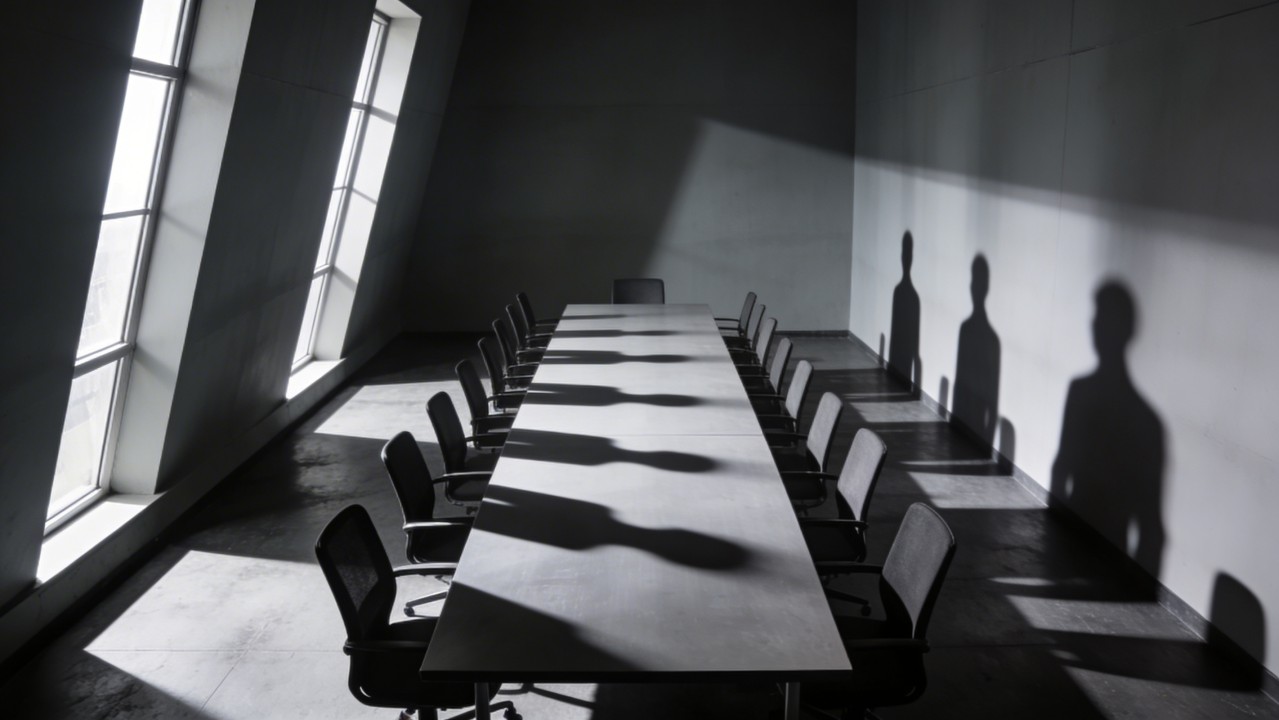
“We evaluated every executive appointment for years. It never crossed our mind to apply the same rigour to the board.”
This admission, shared quietly by a seasoned Chair during a governance review following a near-crisis, captures something that deserves far more attention than it actually receives.Cet aveu, partagé discrètement par un président de conseil lors d’une revue de gouvernance consécutive à une crise évitée de justesse, met le doigt sur quelque chose qui mérite bien plus d’attention qu’il n’en reçoit.
We have all observed the pattern. The board convenes. Decisions are made. Reports are reviewed. Risks are monitored. And yet somewhere below the line of sight, influence flows through channels that are never drawn on any chart. Alliances form, agendas operate below the surface, issues that everyone around the table recognises go unnamed, sometimes for years. On the other end of the spectrum, we find high-performing boards. The gap between the two is rarely about competence.
What appears to be a governance challenge is, in reality, something more fundamental: the structure was designed, the team was not.
Our expert Marco Mancesti addresses one of the most persistent blind spots in organisational life: the board is the most consequential collective in any institution, and the one least treated as a human team. Drawing on extensive experience with governance bodies across sectors, this article explores what boards actually are beneath their formal authority, the invisible dynamics, the foundation board paradox, the role of the chair, and two critical competencies that rarely appear in any board recruitment conversation.
The question is not whether your board governs well on paper. It is whether it functions well as a collective when it matters most.